
Famous Dyslexics Means That
Ignorance often leads to failure
Dyslexia is a syndrome of multiple varied reading and non-reading symptoms affecting over 40 million American children and adults. Many with dyslexia and related learning and attention disorders realize quite early that they are not like their peers. Their learning and coordination, or klutzy difficulties, often lead to impaired self-esteem, ridicule, being bullied and even bullying. They often feel dumb, depressed, and isolated. As a result, one can sadly wonder just how many gifted and creative dyslexics have been blocked from fulfilling their genetic destinies and potential. All too often, learning-disabled children grow up to be underemployed adults, shunted into routine, dead-end occupations for life. Some have difficulties maintaining families and raising children properly. Many drift into drugs and alcohol — even crime. Their loss and cost to society is incalculable. And tragically, this staggering loss was, and is, preventable!
How You Can Succeed
Since dyslexia is often a self-compensating disorder that can often be overcome with time, effort understanding — and especially treatment, it is crucial to provide dyslexics with success stories of well known individuals so that they don’t give up — and indeed persevere. Thus, for example, there have been many dyslexics that have made tremendous contributions to mankind. They include famous entertainers, designers, architects, writers, athletes, jurists, physicians, scientists, political and business leaders.
These successful dyslexics learned to overcome or sidestep their hidden and frustrating barriers, permitting them to accomplish their dreams and desires. In fact, their disorder was often found to be a catalyst for success — forcing them to develop and utilize hidden talents. Often, their most crucial “life-saving” characteristics were determination and perseverance along with a desperate need to prove that they were not as dumb as they inwardly felt. As a result, they never gave up no matter how difficult the task before them seemed. Their successful lives, despite dyslexia, show us that “compensatory miracles” can be accomplished so long as dyslexics are encouraged by loving parents, caring teachers, and “healers” to believe in themselves.
An inspiring sample of some self-compensated famous and successful dyslexics follows. But just remember — for every famous or well-known dyslexic, there are thousands and thousands more who have made it, despite their disorder. Unfortunately, there are millions that have not — that could have!
Because many famous so-called dyslexics (i.e., Einstein, Edison, Da Vinci, etc.) were apparently reported by error, wishful thinking or incomplete data, Dr. Levinson thought it worthwhile to include here only a few self-acknowledged individuals with this disorder — and only one likely candidate.
However, it is important to note that the inner-ear or CVS theory of dyslexia could easily explain the valid existence of all the reported successful dyslexics — even those that appear unsubstantiated or even false, e.g., Einstein, Edison, Da Vinci, etc. For those interested, hundreds of famous others with possible dyslexia have been noted but require further validation.
Further Reading:
- Dyslexia My Life: Information and Advice on Dyslexia and Learning Disabilities By a Dyslexic
- The Legend of the Dull-Witted Child Who Grew Up to Be a Genius
The Power of Unpredictability
Because of all the non-dyslexic variables determining success or even failure, no expert is significantly able to predict the future of individuals — even in those showing early talent. And reliable predictions are especially difficult to make in those dyslexics appearing “retarded” or just plain “lazy or stupid.”
Pablo Picasso
Pablo Picasso became a famous, trendsetting art icon despite, and no doubt because of, his apparent dyslexia. He was born in Malag Spain in 1881. Reported to have failed parochial school education because of reading and related academic difficulties, he was eventually encouraged by his father, an art teacher, to further develop his obvious innate artistic talent. Over the course of his career he developed a unique sense of beauty and style. Pablo painted things as he saw or really felt them — out of order, deformed or tilted. His paintings demonstrated the power of “dyslexic” imagination as well as raw or primary emotion and creativity within the human psyche. Some of his famous works include: The Young Ladies of Avigon, Old Man with Guitar, and Guernica.
Tom Cruise
Tom Cruise grew up and succeeded despite poverty, frequent relocations, inadequate schooling and dyslexia. No doubt he was saved by his gifted acting ability as well as his dogged determination to overcome and thrive, come what may.
Richard Branson
Richard Branson, founder and chairman of London-based Virgin Group, didn’t breeze through school. In fact, school was something of a nightmare for him. His scores on standardized tests were dismal, initially pointing to a similar future. Despite the difficulties and challenges posed by his acknowledged dyslexia, his gifted interpersonal and business talents drove him to succeed.
Many other CEO’s have also acknowledged their dyslexia, including Bill Gates, Charles Schwab, etc.
Athletes with Dyslexia or LD
Famous Athletes like Olympians Bruce Jenner and Greg Louganis as well as auto racing star Jackie Stewart are self-acknowledged dyslexics.
Although Dr. Levinson demonstrated dyslexia to be caused by an inner-ear (CV) dysfunction that most often affects reading and writing coordination as well as related sensory-motor skills, it is crucial to understand that this impairment is function-specific. Thus, for example, Bruce Jenner admitted he couldn’t read and write straight — but these motor coordination impairments weren’t tested in the Olympics. He could have even had a dyscoordinated stuttering and articulation speech impairment, which he didn’t have, and still have been an Olympic champion.
The same holds for other dyslexic athletes who are gifted in certain motor skills while demonstrating impairment in others. You don’t have to be a complete klutz to be dyslexic. And the vast majority are not — as also evidenced by the following athletes reported to be dyslexic or LD:
- Henry Winkler, Actor
- Steven Spielberg, Director
- Mohammed Ali, World Heavyweight Campion Boxer
- Anne Bancroft, Actress
- Duncan Goodhew, Olympic Swimmer
- Magic Johnson, Basketball Hall of Famer
- Bob May, Golfer
- Diamond Dallas Page, World Wrestling Champion
- Steve Redrave, Olympic Gold Medalist (rowing)
- Nolan Ryan, Pitcher for the Texas Rangers
Gifted and Famous, Despite Dyslexia — Invaluable Insights
Medical Treatment Enhances vs. Diminishes Gifted Functioning
Dr. Levinson has examined and treated many famous dyslexics in his practice. Their success is invariably inspiring, even before treatment. And most often, medical therapy significantly enhances their genius while eliminating or minimizing dyslexic functioning — invariably improving self-esteem. Contrary to misguided fears, successful medical and related non-medical treatments do not hamper creativity. In fact, therapy enhances creativity. Even though many "experts" believe or fantasize that dyslexics are more creative than non-dyslexics and are “blessed” by their disorder, a majority of famous dyslexics instead feel dumb and/or ugly — merely considering themselves impostors. They often feel like actors fooling the crowd into believing they’re competent or “not dumb.” Accordingly, many dyslexics disagree that they're blessed and desire nothing more than to feel normal rather than exceptional.
Interestingly, there are dyslexic artists with dysgraphia who can only draw calligraphy; doctors who can’t read, spell and/or write well; lawyers who can’t calculate; even mathematicians who can’t mentally add, subtract and multiply; musicians unable to read music; athletes who are clumsy and accident-prone in non-gifted areas; and even dyslexia experts who fail to understand dyslexia.
The study of gifted dyslexics, past and present, reveals crucial insights often scientifically overlooked and/or misunderstood:
- The part of the brain responsible for causing dyslexia (impaired CV functioning) is different from the brain structure responsible for gifted functions in individuals (the cerebral cortex or thinking brain).
- A dysfunction in one part of the brain (i.e., dyslexia) may trigger compensator functioning in another area of the brain.
- Gifted functioning is most often genetic. If latent or inhibited, gifted functions may may be triggered rather than newly created by compensatory mechanisms. In other words, dyslexia doesn’t determine creativity and genius. Dyslexia may, however, stimulate creativity because of a biological need to compensate for the dysfunction. By contrast, secondary emotional factors triggered by dyslexia resulting in alcohol and drug abuse as well as depression and anxiety may block creative mechanisms from surfacing. This observation further emphasizes the need for therapy--the earlier the better.
- The tremendous differences in function vs. dysfunction within dyslexics highlights the dyslexic rule for all: Dyslexia is a syndrome of multiple varied reading and non-reading symptoms, many of which may be compensated for over time. Some dyslexics may read well, but write, spell and calculate poorly. All combinations exist — which is why it is unreasonable and wrong to define dyslexia as only a severe reading disorder.
- In fact, there are dyslexic artists who can only draw landscapes, but others can only do portraits… The list of functioning and dysfunctioning combinations is as endless as it is fascinating. This insight clearly refutes the misguided tendency to define or portray this complex and multidimensional disorder as only a severe reading difficulty.
Whether you are going to achieve master art or reknown scientist as a dyslexic still depends on acquiring basic reading and writing skills - why not call for a free consultation today with Dr. Levinson?
Albert Einstein
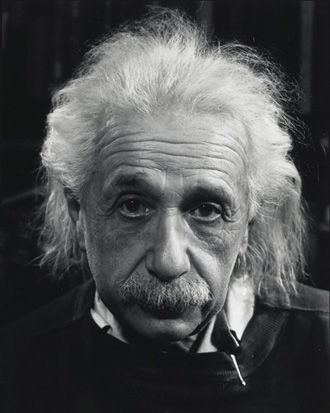
Was he really dyslexic? He would have made it anyway! So can you!
Pablo Picasso
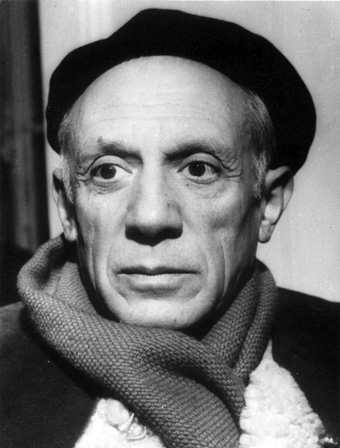 Pablo Picasso became a famous, trendsetting art icon despite, and no doubt because of, his apparent dyslexia.
Tom Cruise
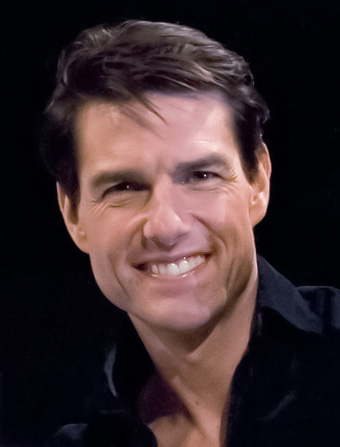 Tom Cruise grew up and succeeded despite poverty, frequent relocations, inadequate schooling and dyslexia.
Richard Branson
 Despite the difficulties and challenges posed by his acknowledged dyslexia, his gifted interpersonal and business talents drove him to succeed.
Henry Winkler
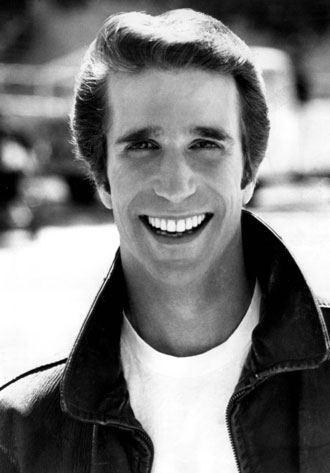 Famous for his role as The Fonz on the long-running hit series Happy Days, Henry Winkler won acclaim as the author of the best-selling Hank Zipzer series of books for young adults, which chronicles the adventures of a young boy coping with dyslexia.
Steven Spielberg
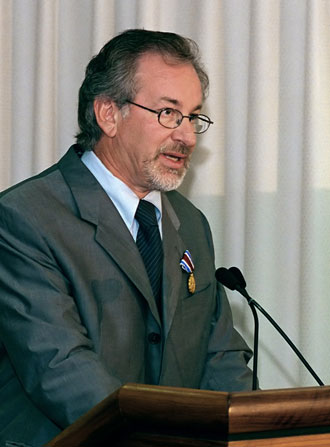 One of the most popular and influential directors of all time, with a career spanning several decades, Steven Spielberg was diagnosed with dylexia in 2007.